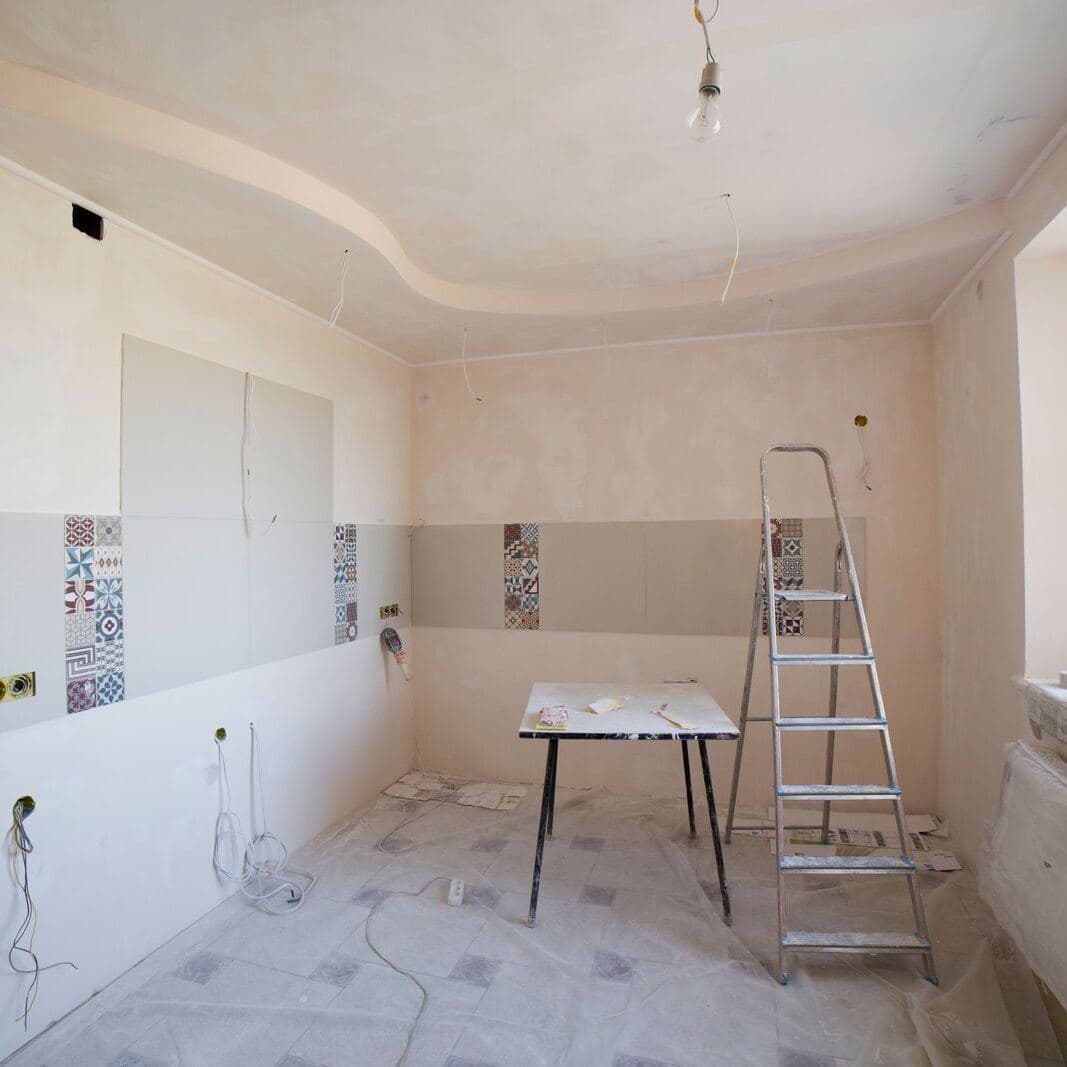

Yes, a California homeowner can buy builders risk, but not from every program. Whether a market will take you depends mostly on who does the work. Blitz's builders risk program insures the owner, a general contractor, a developer or a tenant, one structure per policy up to $5 million.[1] Alchemy's program is written around a licensed general contractor with at least three years of experience.[2] Green Shield's ground-up course of construction program says plainly: "no owner-builders."[3]
This guide is for an owner building a house, adding an accessory dwelling unit (ADU) or doing a large remodel, whether you hired a general contractor, are hiring the trades yourself, or are swinging the hammer. It explains which programs fit each case, what they ask of your contractor, and what to have ready. To start a request, open our builders risk page. For work on an existing home, the renovation insurance page goes straight to the remodel questions.
Owner-builder
A property owner who builds or improves a structure on their own land without a general contractor. California's Business and Professions Code section 7044 lets an owner do the work personally (or with wage employees) when the improvements are not "intended or offered for sale," or contract directly with licensed trade contractors.[6]
Can a homeowner buy builders risk insurance?
Yes. Builders risk covers the structure and materials while they are being built or renovated, and the owner has an insurable interest in both. The limit is the market's appetite, not the law. Here is how the programs available to Menlo in California treat an owner:
| Program | Owner as the insured | Who must do the work | Size and term | What it asks about the contractor |
|---|---|---|---|---|
| Blitz builders risk (surplus lines) | Yes: owner, GC, developer or tenant[1] | Not limited to a GC | Up to $5M per location, one structure per policy. 3, 6, 8, 10 or 12 months[1] | Contractor carries $1M/$2M per project GL, AI on CG 20 10 and CG 20 37, waiver of subrogation, 2 years completed operations[4] |
| Alchemy national builders risk (admitted and surplus lines) | Application is built around the builder | Licensed general contractor with 3+ years[2] | New construction $150K–$5M per structure. Renovations $10K–$1M. $400 minimum per term[7] | Builder experience and 5 years of loss runs[7] |
| Green Shield course of construction | Owner-builders ineligible[3] | A contractor with at least $1M liability[3] | New construction up to $4M, up to 3 stories[3] | Contractor license, prior project experience, budget and timeline[3] |
Blitz refers a project to an underwriter when construction has already started, the building will be occupied before completion, or the work is load-bearing.[1] Those aren't refusals, but they slow the quote, so mention them at the start.
What if I'm the owner-builder doing the work myself?
Expect fewer options and more questions. Green Shield's ground-up program won't take you, and Alchemy's program expects a licensed general contractor as the builder.[3][2] Blitz is the program in our files that names the owner as an eligible insured, and its application still asks about the contractor's liability.[1][4] If nobody holds a contractor's liability policy, tell the broker. That answer decides whether the application goes further online or to a hand review.
The law has its own conditions on being an owner-builder. Section 7044 covers an owner whose improvements are not intended or offered for sale. Selling the structure within one year of completion creates a presumption that it was built for sale, and selling five or more in a year makes that presumption conclusive.[6] If you plan to sell, talk to the Contractors State License Board or a lawyer before you start, because it also affects how an insurer sees the project.
What if I hire a licensed general contractor?
Then the builders risk markets open up. Alchemy writes 1–4 family new construction and remodels of existing homes when the builder is a licensed general contractor with at least three years of experience.[2][8] Green Shield writes ground-up residential projects when the contractor carries at least $1 million of liability.[3] Our application keeps the builder and the insured as separate roles, so you can be named as the owner while the contractor's company is listed as the builder.
Who buys the policy is a contract question. Many construction contracts say whether the owner or the contractor carries builders risk. Read yours, and make sure only one policy is bought and that both of you are named on it.
How do I insure an ADU while it's being built?
Treat a new detached ADU like any other new building, and a garage conversion or attached ADU like a renovation. Green Shield's ground-up application asks, "Is the property to be insured an Accessory Dwelling Unit (ADU) to a primary residence?", so the program looks at ADUs specifically.[5] Alchemy writes renovations of existing residential structures with a separate limit for the existing building, from $150,000 to $1,000,000.[7]
Two practical points. First, the main house stays on its own homeowners or dwelling policy during the build, so tell that insurer about the project and ask how it treats construction on the lot. Second, if the main house is on the California FAIR Plan, its application checklist says a dwelling in course of construction or undergoing a significant remodel needs a commercial application, not a dwelling one.[9]
What does builders risk cover for a homeowner?
The building and materials, not people. Builders risk pays for direct damage to the work in progress and the materials on site, in transit or in storage, within the limits you choose. Alchemy's program includes, for example, $10,000 for materials in transit and at temporary storage locations and offers soft costs from $5,000 to $100,000.[7] Green Shield sublimits theft of building materials at $25,000 on its ground-up program.[3]
Injuries and damage to other people are general liability. Blitz can package premises liability with builders risk, and it can be written with or without construction operations.[1] The contractor's own general liability is the policy that answers for their work. Our guide to what general liability covers explains the difference.
What should I prepare before I apply?
Who does the work
The contractor's company name and license number, or a note that you are the owner-builder. Have the contractor's certificate of insurance if you have one.
The project
New build, ADU, addition, or structural or non-structural renovation. For a renovation, the cost of the work and the value of the existing house.
Values and schedule
Completed value, start date, how long it will take, and whether work has already started.
The site
Address, construction type, number of stories, distance to a hydrant, and site security such as fencing, lighting or an alarm.
Your history
Any property claims in the last few years, and the current homeowners or FAIR Plan policy on the lot.
Then request builders risk quotes. For what it costs, see how much builders risk insurance costs in California.
Frequently asked questions
Can I get builders risk as an owner-builder in California?
Does my homeowners policy cover a remodel or ADU under construction?
Ask your insurer in writing before work starts. Homeowners policies are written for an occupied, finished home, and the California FAIR Plan sends significant remodels and course of construction to its commercial application.[9]
Who should buy builders risk, me or my contractor?
Whoever the contract names. Owners often buy it when a lender requires it or when they hire the trades themselves. Make sure both of you are named on the one policy.
What liability does my contractor need for my builders risk policy?
On Blitz, when the owner is the insured, the application asks for the contractor's general liability of $1 million per occurrence and $2 million per project, the owner as additional insured on CG 20 10 and CG 20 37, a waiver of subrogation, primary coverage and two years of completed operations.[4] Green Shield requires the contractor to carry at least $1 million.[3]
This guide is for educational purposes and summarizes California law, carrier program guides dated 2025–2026 and the carrier applications as Menlo walked them in September 2026. Programs, eligibility and forms change, and your policy's terms, conditions and endorsements control. Menlo Insurance Services (CA license 6020106) is a licensed broker that may earn a commission on a placement and does not guarantee that any coverage or price will be available. Blitz places business with non-admitted insurers, which are not backed by the California Insurance Guarantee Association.
The Bottom Line
A homeowner can buy builders risk in California, and the key question is who does the work. With a licensed general contractor, Alchemy, Green Shield and Blitz can all look at the project.[2][3][1] As an owner hiring the trades or doing the work, Blitz is the program in our files that names the owner as insured, and it still expects a contractor's liability behind the job.[1][4] Green Shield's ground-up program won't write owner-builders.[3] Tell the broker about an ADU, work already started and load-bearing changes at the start.
References
- 1.Blitz Insurance. “Builder's Risk Appetite.” 2025. https://cdn.prod.website-files.com/6849cf37787dd9efa946a7bf/690a2b1abb749501f45b63f3_Builder%E2%80%99s%20Risk%20PDF%20V2.pdf ↩
- 2.Alchemy Insurance Solutions. “BR N Program QRC (applicant and eligibility rules).” 2025. https://49127919.hs-sites.com/hubfs/BR%20N%20Program%20QRC%20updated%2010925.pdf ↩
- 3.Green Shield Risk Solutions. “Course of Construction, Specialty Lines.” 2026. https://6041899.fs1.hubspotusercontent-na1.net/hubfs/6041899/Green%20Shield%20Risk/Course%20of%20Construction%20-%20Specialy%20Lines.pdf ↩
- 4.Blitz Insurance. “Builder's Risk program; owner's interest contractor requirements as shown in the Blitz application walked by Menlo, September 2026.” Accessed 2026-09-27. https://cdn.prod.website-files.com/6849cf37787dd9efa946a7bf/690a2b1abb749501f45b63f3_Builder%E2%80%99s%20Risk%20PDF%20V2.pdf ↩
- 5.Green Shield Risk Solutions. “Course of Construction program; ADU eligibility question as shown in the Green Shield application walked by Menlo, September 2026.” Accessed 2026-09-27. https://6041899.fs1.hubspotusercontent-na1.net/hubfs/6041899/Green%20Shield%20Risk/Course%20of%20Construction%20-%20Specialy%20Lines.pdf ↩
- 6.California Legislative Information. “Business and Professions Code section 7044 (owner-builder exemption).” Accessed 2026-09-27. https://leginfo.legislature.ca.gov/faces/codes_displaySection.xhtml?sectionNum=7044.&lawCode=BPC ↩
- 7.Alchemy Insurance Solutions. “Builders Risk National Program (Admitted & E&S) Quick Reference Sheet.” 2025. https://6041899.fs1.hubspotusercontent-na1.net/hubfs/6041899/Carrier%20Store%20Resources/Alchemy/BR%20N%20Program%20QRC%20updated%2010925.pdf ↩
- 8.Alchemy Insurance Solutions. “National Builders Risk (program one-pager).” 2025. https://6041899.fs1.hubspotusercontent-na1.net/hubfs/6041899/Carrier%20Store%20Resources/Alchemy/One-Pager%20BR.pdf ↩
- 9.California FAIR Plan Association. “Dwelling Application Checklist (ACORD 854 CA).” 2020. https://www.cfpnet.com/wp-content/uploads/2020/02/Dwelling%20Application%20REV%2001%2020.pdf ↩