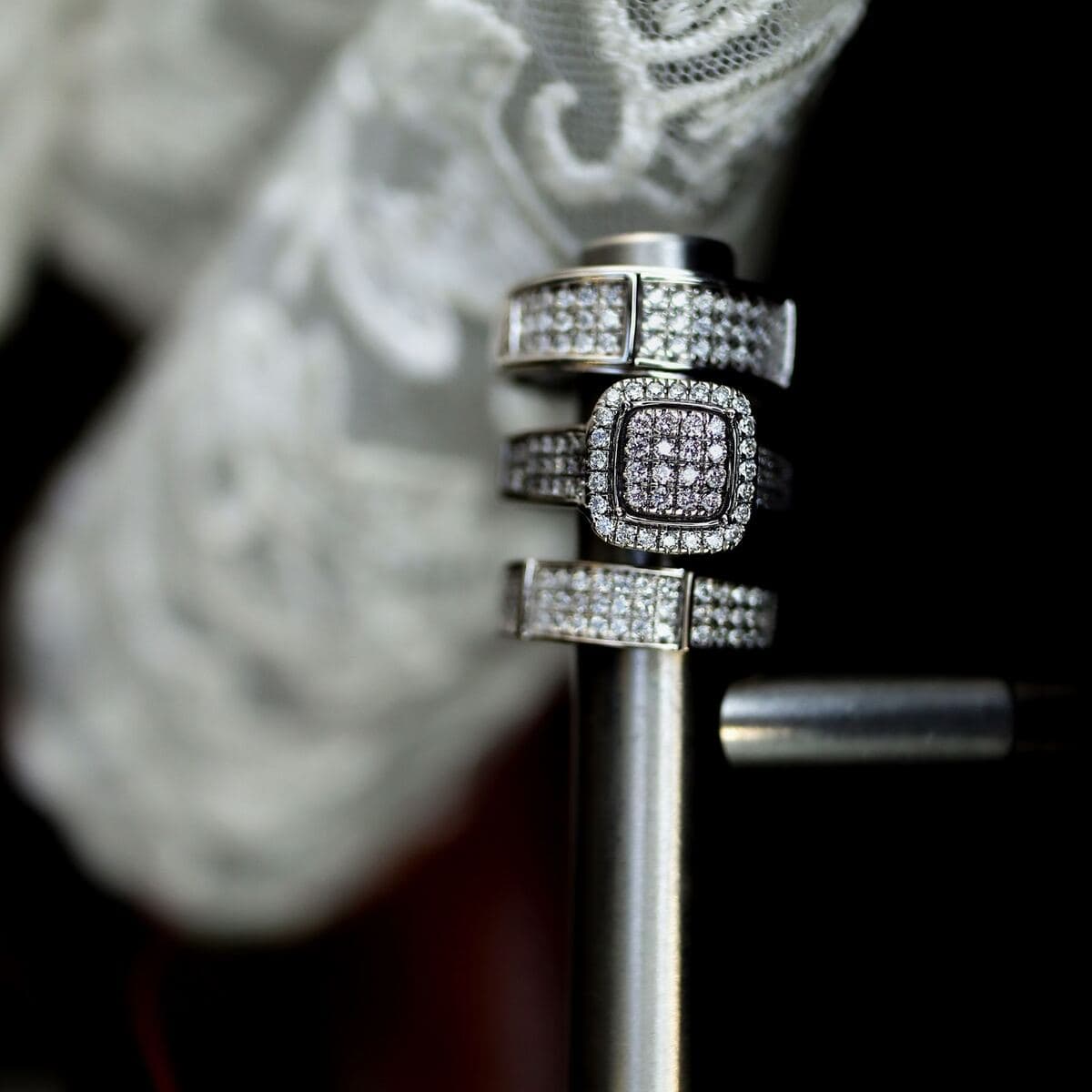

Engagement ring insurance typically costs about 1% to 2% of the ring's value each year, according to Jewelers Mutual, so a $6,000 ring would run you around $60 to $120 a year.[1] Most people assume their homeowners or renters policy provides enough coverage, but it usually caps theft of jewelry at $1,500 and doesn't cover a stone that falls out of the setting or a ring that goes missing.[2] A dedicated jewelry policy covers loss, damage, theft and disappearance, and lets you select your own jeweler to repair or replace the ring.[3]
This guide explains what jewelry insurance costs, why a home policy usually isn't enough for an engagement ring, what the insurer will ask during the application, and how to decide whether it's worth it. To get a quote, start from our jewelry insurance page.
How much does engagement ring insurance cost?
Jewelers Mutual says premiums "typically cost about 1–2%" of the jewelry's value each year, and that your exact rate may vary depending on factors such as location, value and deductible.[1] Applying that range:
| Ring value | About 1% a year | About 2% a year |
|---|---|---|
| $6,000 | $60 | $120 |
| $10,000 | $100 | $200 |
| $15,000 | $150 | $300 |
| $25,000 | $250 | $500 |
These are estimates from the published range, not quotes. Your price is affected by three factors Jewelers Mutual names: where you live (crime and theft rates), the value of the piece, and the deductible you choose, where a higher deductible lowers the premium.[1] Jewelers Mutual also offers discounts for safes and home alarm systems.[3]
Does homeowners or renters insurance cover an engagement ring?
Partly, and usually not enough. The standard homeowners form, HO 00 03, sets a special limit of "$1,500 for loss by theft of jewelry, watches, furs, precious and semiprecious stones."[2] That's the most it pays if someone steals your ring, whatever the ring cost. Home and renters policies also pay for personal property losses only for causes listed in the policy, such as fire and theft, so a diamond that comes loose from its setting or a ring left at the gym is usually not covered at all.
You have two ways to fix that:
| Option | How it works | Watch for |
|---|---|---|
| Schedule the ring on your home or renters policy | The ring is listed with its value, often with broader coverage than the $1,500 theft limit | A claim is on your home policy's record; terms vary by insurer |
| Stand-alone jewelry policy (for example, Jewelers Mutual) | A separate policy covering loss, damage, theft and disappearance; repair or replacement through a jeweler you choose[3] | You manage a second policy |
A stand-alone policy keeps jewelry claims off your home insurance, which can matter in California, where home insurers look closely at claims history. If you rent, our guide to renters insurance in California explains what a renters policy covers and doesn't.
What does jewelry insurance cover?
A separate jewelry policy protects the ring against loss, damage, theft and disappearance, including while you travel anywhere in the world.[3] Jewelers Mutual writes it as a repair or replacement policy: after a covered claim you work with your jeweler of choice to repair or replace the ring with one of the same kind and quality.[3] It covers loose stones while they are being set, and scheduled items of any value, with no maximum.[3]
What will the insurer ask for?
The ring's value, your address and your loss history, and for larger schedules, more detail. Jewelers Mutual refers an application to underwriting when the total schedule is $50,000 or more, any item is valued over $25,000, loss history exceeds $7,500 within seven years, or a schedule of $10,000 or more includes a watch and a wearer under 40.[4] It can use photo authentication (TruePic) for jewelry, safe and appraisal photos at underwriting.[4]
Keep the paperwork. Jewelers Mutual says appraisals, proof of purchase (detailed receipts, warranty cards) and photos will be required when you file a claim, and recommends submitting them when you buy the policy, regardless of value.[4]
Is engagement ring insurance worth it?
For most rings worth more than the $1,500 home policy theft limit, yes, since the cost is small compared with the ring and the most common losses (a lost stone, a ring left somewhere) aren't covered by a home policy at all.[1][2] A $3,000 ring is a closer call; compare the annual premium with what you could afford to replace yourself.
Menlo quotes personal jewelry coverage through Jewelers Mutual. If you also want other valuables covered, such as watches or collectibles, ask about scheduling them on the same policy.
Frequently asked questions
How much does it cost to insure a $10,000 ring?
At Jewelers Mutual's published range of about 1% to 2% of value a year, roughly $100 to $200 a year, depending on your location and deductible.[1]
Should I insure a $3,000 ring?
It depends on whether you could replace it yourself. It is above the $1,500 theft limit on a standard home policy, which also doesn't cover a lost ring.[2]
Is a jeweler's protection plan the same as insurance?
No. A protection plan or warranty usually covers repairs and maintenance, while a jewelry insurance policy covers loss, theft and disappearance.[3] Read what each one excludes.
Do I need an appraisal to insure an engagement ring?
Not always to buy the policy, but Jewelers Mutual requires appraisals, receipts or photos at the time of a claim and recommends sending them in up front.[4]
This guide is for educational purposes and summarizes Jewelers Mutual's published information and agent guidelines and the ISO homeowners form. Cost figures are estimates from the insurer's published range, not a Menlo quote. Coverage and prices change, and your policy's terms control. Menlo Insurance Services (CA license 6020106) is a licensed broker that may earn a commission on a placement and does not guarantee that any coverage or price will be available.
The Bottom Line
You can generally expect insuring an engagement ring to cost about 1% to 2% of its value each year.[1] A home policy's $1,500 theft limit and narrow causes of loss leave most rings underinsured, while a jewelry policy covers loss, theft, damage and disappearance.[2][3] Save your appraisal, receipt and photos, because they will be required when you file a claim.[4]
References
- 1.Jewelers Mutual Group. “Decoding Jewelry Insurance Cost.” Accessed 2026-09-27. https://www.jewelersmutual.com/jewelry-insurance-explained/cost ↩
- 2.Insurance Information Institute (ISO form). “Homeowners 3, Special Form, HO 00 03 10 00 (sample): Special Limits of Liability.” 2000. https://www.iii.org/sites/default/files/docs/pdf/HO3_sample.pdf ↩
- 3.Jewelers Mutual Group. “Jewelry Insurance: Peace of mind for every piece (agent one sheet).” 2023. https://6041899.fs1.hubspotusercontent-na1.net/hubfs/6041899/Carrier%20Store%20Resources/Jewelers%20Mutual/One%20sheet.pdf ↩
- 4.Jewelers Mutual Group. “Reference Guide: Underwriting Referral Guidelines and TruePic.” 2023. https://6041899.fs1.hubspotusercontent-na1.net/hubfs/6041899/Carrier%20Store%20Resources/Jewelers%20Mutual/Reference%20Guide.pdf ↩