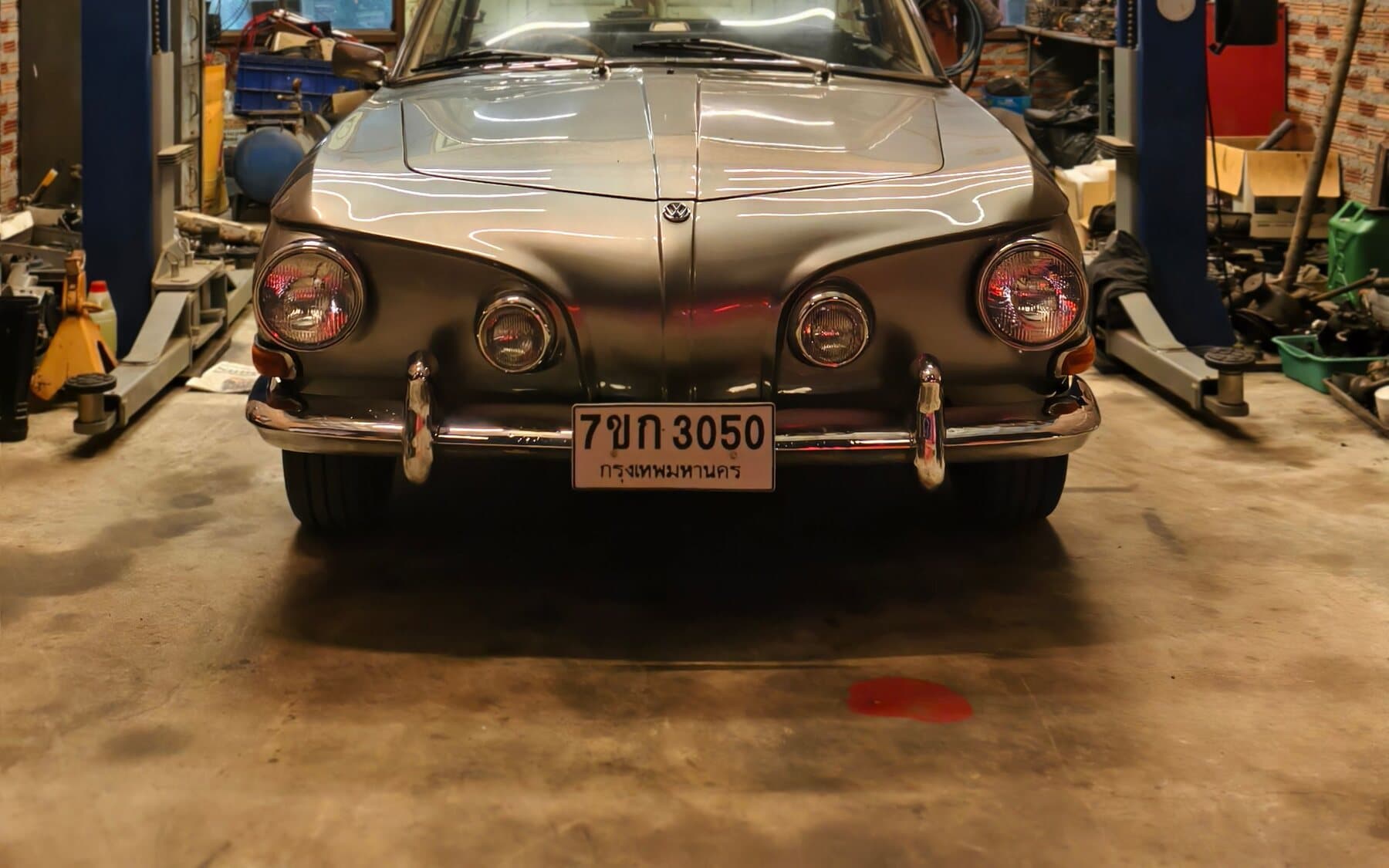

Agreed value car insurance pays a predetermined amount that you and the insurer set when the policy starts, so after a covered total loss you receive that amount instead of a depreciated market value. Hagerty, which calls it Guaranteed Value, says that in a covered total loss "you will receive the vehicle's full insured value, which we will have already agreed on."[1] It is sold mostly on collector and classic cars, whose value can increase over time, whereas a standard auto policy typically pays only what comparable cars are selling for.[2]
This guide explains the differences between agreed value, stated value and actual cash value, who may qualify for an agreed value policy, and how the value is arrived at. To quote a collector car, start from our classic car insurance page.
What is agreed value car insurance?
A policy that pays a pre-agreed amount if the car is a total loss. You and your insurer agree on what the car is worth when the policy is written, the premium is based on that value, and after a covered total loss the insurer pays it without depreciation.[1] No matter what the car is worth at the time of the loss, nothing about its market price affects the payment. Partial losses, such as a damaged fender, are still paid as repairs.
Agreed value vs. stated value vs. actual cash value
The difference is what the insurer pays after a total loss.
| Agreed value | Stated value (stated amount) | Actual cash value | |
|---|---|---|---|
| Value set | When the policy starts, by agreement[1] | When the policy starts, by the owner | At the time of loss |
| Total loss payment | The agreed amount[1] | The lowest of repair cost, the car's cash value at the time of loss, or the stated amount[3] | The cost of a comparable car, less the deductible[2] |
| Depreciation | None | Can apply, because cash value can be lower | Yes |
| Typical use | Collector and classic cars | Some specialty auto policies | Everyday cars on a standard auto policy |
The stated value trap is the one to watch. A stated amount sounds like agreed value, but because the insurer can pay the car's lower cash value, the number on the declarations page may be a ceiling rather than a promise.[3]
How does a standard auto policy value a total loss in California?
By actual cash value, based on comparable cars. California's fair claims regulations let the insurer either pay cash based on "the actual cost of a 'comparable automobile' less any deductible," including all taxes and fees, or provide a replacement car.[2] A comparable automobile must be of like kind and quality, the same or newer model year, with similar options and mileage, and available for retail purchase in the local market within 90 days of the settlement offer.[2]
For an ordinary car that works well. For a completely restored 1967 coupe or a rare modern collectible, finding true comparables is difficult, and the final value can be much lower than what the owner paid for the restoration. This is where agreed value comes into play.
Who qualifies for agreed value coverage?
Owners who use the car as a collectible, not as daily transportation. Hagerty's rules are typical of collector programs:[4]
- A regular-use vehicle for every driver. All household members with a valid license must have a regular-use vehicle for daily driving, insured in their own name.
- Secure storage. Hagerty prefers an enclosed, secure structure such as a private garage or pole barn, and will consider carports, driveways, parking garages and car-hauling trailers subject to underwriting review.
- Limited use. Club events, shows, tours and occasional pleasure driving are allowed, but the car can't be a daily driver.
- A clean record. In most states, drivers can't have serious infractions such as alcohol-related offenses, reckless driving or excessive speeding in the last three years.
The same page says eligibility depends more on how a car is used and cared for than on its age, so newer collectible cars can qualify.[4]
How is the agreed value set?
By agreement, based on market data, documented restoration and the car's originality and condition. Hagerty says it typically doesn't require an appraisal and will ask for more documentation during underwriting if it needs it.[1] Have your photos, receipts from restoration work and any appraisal available, because they can help support a higher value. Review the value every time you renew: collector markets move, and when values go up, a car insured for last year's value is underinsured.
Menlo quotes collector-vehicle insurance through Hagerty. Hagerty's policies are issued by Essentia Insurance Company; our guide to Essentia Insurance Company explains who stands behind the policy, and our guide to who underwrites classic car insurance compares other programs.
Frequently asked questions
What does agreed value mean in car insurance?
You and the insurer agree the car's value when the policy starts, and that amount is paid after a covered total loss, without depreciation.[1]
Should I choose market value or agreed value?
Agreed value fits a car whose worth depends on condition, rarity or restoration, where comparable cars are hard to find. Actual cash value on a standard policy fits an everyday car.[2]
Is stated value the same as agreed value?
No. A stated amount can cap the payment: the insurer pays the lowest of repair cost, the car's cash value at the time of loss, or the stated amount.[3]
Can I get agreed value on my daily driver?
Collector programs generally don't allow it. Hagerty, for example, requires a separate regular-use vehicle and doesn't cover a collector car used for daily driving.[4]
Do I need an appraisal for agreed value insurance?
Not always. Hagerty says it typically doesn't require one and may ask for documentation during underwriting.[1]
This guide is for educational purposes and summarizes California's fair claims regulations, carrier consumer information and program requirements. Program terms differ, and your policy's terms control. Menlo Insurance Services (CA license 6020106) is a licensed broker that may earn a commission on a placement and does not guarantee that any coverage or price will be available.
The Bottom Line
Agreed value establishes the car's value up front and pays it after a covered total loss, with no consideration given to depreciation.[1] Stated value can pay less, while a standard auto policy pays actual cash value based on comparable cars.[2][3] If your car is a collectible you do not normally use for daily transportation, an agreed value collector policy is usually the better fit.[4]
References
- 1.Hagerty. “Insurance Frequently Asked Questions (Guaranteed Value, appraisals).” Accessed 2026-09-27. https://www.hagerty.com/insurance/frequently-asked-questions ↩
- 2.Legal Information Institute. “Cal. Code Regs. tit. 10, § 2695.8, Additional Standards Applicable to Automobile Insurance, subsection (b).” Accessed 2026-09-27. https://www.law.cornell.edu/regulations/california/10-CCR-2695.8 ↩
- 3.American Family Insurance. “Agreed value vs. stated amount.” Accessed 2026-09-27. https://www.amfam.com/resources/articles/on-the-road/agreed-value-vs-stated-amount ↩
- 4.Hagerty. “Insurance Qualifications for Classic Vehicles.” Accessed 2026-09-27. https://www.hagerty.com/insurance/classic-car-insurance/does-my-vehicle-qualify ↩