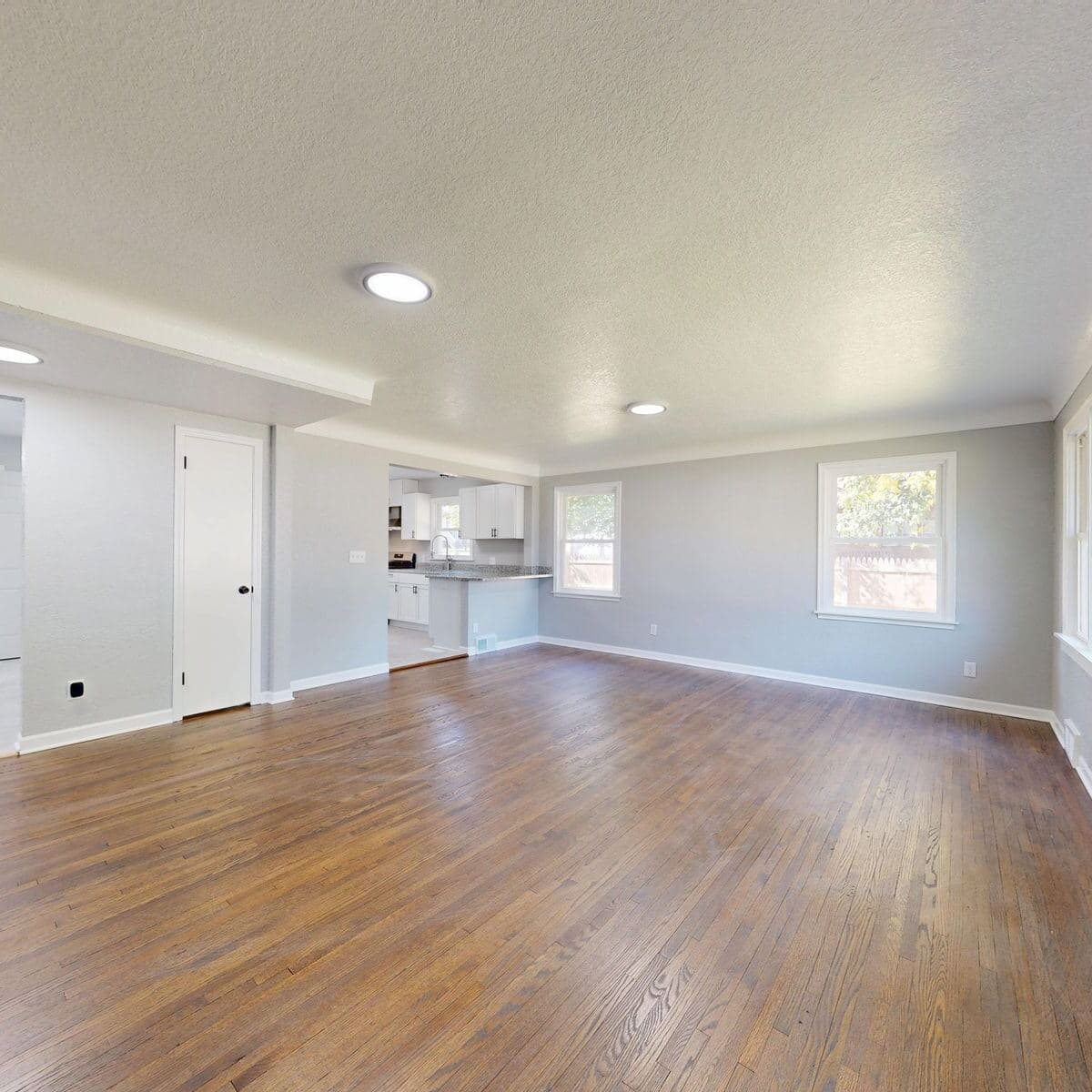

An empty California house needs a policy written for vacancy, because the ordinary one stops working. Under Insurance Code section 2071, the insurer is not liable for fire losses once a building "is vacant or unoccupied beyond a period of 60 consecutive days," unless the policy says otherwise.[1] The fix is to tell the insurer the house is empty and move it to a vacant-home program: the California FAIR Plan takes 1–4 unit homes vacant up to one year, Delos writes vacant homes on Lloyd's paper from a $1,500 annual minimum premium, and Green Shield's program accepts residential vacancies of up to 48 months.[6][3][4]
This guide is for the person holding the keys to an empty house: an heir, an executor or administrator in probate, a trustee, or an owner who moved out and hasn't sold yet. It covers when the old policy stops protecting you, which kinds of programs take an empty home, how to name an estate or trust, and what vacant coverage costs. Menlo Insurance Services submits vacant homes to several of these markets. To start, use our vacant property insurance page.
Vacancy clause
A policy condition that removes or reduces coverage once a building has been empty for a set number of days. In California the standard fire policy uses 60 consecutive days.[1] Many policies also treat "vacant" (no furnishings) and "unoccupied" (furnished, but nobody living there) differently, so read your own policy's definitions.
When does my homeowners policy stop covering an empty house?
After 60 consecutive days for fire, under the California standard fire policy, unless your policy grants more in writing.[1] Other perils can end sooner. The FAIR Plan's dwelling policy, for example, excludes vandalism and malicious mischief if the home "has been vacant or unoccupied for more than 30 consecutive days immediately before the loss," and it counts a house as "unoccupied" when nobody is lawfully living in it, furnished or not.[5]
For an inherited home, the count usually starts on the day the last resident died or moved to care, not on the day the estate opened. If the house has been empty for weeks already, call the current insurer, say so in writing, and ask what it will do. Some insurers endorse a short vacancy permit, others ask you to move the house to a vacant program. Don't let the policy renew on the assumption that someone lives there.
Who can buy insurance on an inherited house?
Whoever holds the insurable interest, named the way the title reads. That is usually the estate (through the executor or administrator) while probate is open, the trustee if the house is in a trust, or the heirs once title passes to them. The FAIR Plan's application lists Individual, Corporation, LLC or LP, Estate and Trust as applicant types.[7] Delos writes a vacant home in the name of an LLC, LLP or trust, but "the deed to the property must exactly match the name of the respective entity," and the entity must be US-based.[3] Delos also declines an applicant with no ownership interest in the property.[3]
So before you shop, have the recorded deed or the letters of administration and the trust's exact name. A policy issued to the wrong name is the most avoidable problem in an estate claim.
Which programs insure a vacant home in California?
Four kinds of markets take an empty California house. Each has its own time limit, value range and add-ons.
| Program | Who issues it | How long it can be vacant | Dwelling limit | Published minimum premium |
|---|---|---|---|---|
| California FAIR Plan dwelling fire | California FAIR Plan Association (state insurer of last resort)[6] | Up to one year. Over a year is ineligible unless under construction[6] | Up to $3 million total per location[7] | Not published. Rated per home |
| Delos vacant home | Lloyd's (non-admitted), DP-3 form[3] | Not more than 36 months[3] | $100,000 to $1,500,000[3] | $1,500 a year, plus taxes and fees[3] |
| Green Shield vacant property | A-rated markets through Green Shield, DP-1 or DP-3[4] | Up to 48 months (residential)[4] | Up to $4 million ($750,000 in protection class 9/10)[4] | Not published |
| Aegis dwelling fire | DB Insurance (admitted) or Lloyd's via Hiscox (surplus lines), through Aegis General[8] | Vacant is a listed occupancy[9] | Up to $900,000 DP-3 or $750,000 DP-1[9] | Not published |
The FAIR Plan covers named perils only: fire, lightning and internal explosion, with extended coverage and vandalism as options.[7] It leaves out theft, water damage and liability, which is why a vacant FAIR Plan policy is often paired with a difference in conditions policy. Our DIC guide explains that pairing. The FAIR Plan also asks a vacancy questionnaire: when and why the house became vacant, whether it is open to trespass, boarded up, for sale or being remodeled, and whether you want the vacancy permit endorsement.[2]
Delos and Green Shield are surplus lines programs built for empty homes. We cover the named programs in more depth in our guides to Aegis, American Modern, which writes 3-, 6- and 12-month vacant terms, and Foremost, which reopened its vacant policy to new California customers in 2025.
How much does vacant home insurance cost in California?
The clearest published number is Delos's: a base annual minimum written premium of $1,500, before taxes and fees, and 25% of the premium is earned the moment the policy starts, so canceling early doesn't refund all of it.[3] Its policy fee, stamping fee and state tax are charged every year, and a card payment adds a 3% processing fee.[3] On any surplus lines policy in California, add the 3% surplus lines tax and the 0.18% stamping fee to the premium.[10]
Above the minimum, the price follows the house: its replacement value, construction and roof, wildfire exposure, how long it has been empty and what you add. Delos's optional coverages each carry a premium charge: vandalism, water damage from plumbing and freezing, theft of the dwelling's fixtures, theft of building materials and cosmetic renovation.[3] The FAIR Plan prices each home from its own rate book and lists the estimated premium only on the application's pricing page.[7]
We don't publish a typical vacant-home price. Programs differ too much, and we don't have enough completed vacant-home quotes of our own to give a representative figure.
What does a vacant home policy leave out?
More than a homeowners policy. Plan to check these on every quote:
- Vandalism. Delos excludes it unless you add the vandalism endorsement.[3] The FAIR Plan needs its vacancy permit endorsement for vandalism once the home is empty.[2]
- Theft. Delos's vacant policy excludes theft of personal property and offers theft of the dwelling's fixtures and of building materials as endorsements.[3] Green Shield caps theft of building materials at $10,000.[4]
- Water. Delos excludes water damage unless you add its water, steam and freezing endorsement.[3]
- Renovation. Delos declines structural renovation, including a roof replacement, and covers cosmetic work up to $400,000 or 50% of the dwelling limit, whichever is less. Green Shield takes no structural renovations and covers cosmetic work up to 50% of building value or $400,000.[3][4] Structural work belongs on a builders risk policy for homeowners.
- Liability. Delos offers $100,000 to $1,000,000 of personal liability, with a $100,000 cap on pool claims and no coverage for dog bites.[3]
What do I need to apply?
The vacancy facts
The date the house became empty, the reason (death, move, tenant left, sale) and the plan: sell, rent, move in or renovate, with rough dates.
Who owns it
The exact name on the deed, or the estate or trust name, and who will sign. Have the letters of administration or the trust's name ready.
The house
Year built, construction, roof type and age, square footage, and any updates to wiring, plumbing and heating. Delos, for example, declines knob-and-tube wiring and certain electrical panels.[3]
Security and condition
The current policy
The expiring insurer and policy number, and any claims in the last three to five years.
When you have these, start the vacant property application. The first question asks what is on the property, and a house continues with the vacant-home questions. If the property is only land, see our guide to what vacant land insurance costs.
Frequently asked questions
How long can a house be vacant before insurance stops covering it in California?
Can an estate in probate buy insurance on the house?
Does the FAIR Plan insure vacant homes?
Yes, 1–4 unit homes vacant up to one year. Buildings vacant for more than a year are ineligible unless they are under construction.[6]
What is the cheapest way to insure an empty house?
There is no single cheapest program. Delos's published minimum is $1,500 a year before taxes and fees.[3] A FAIR Plan fire policy is often the base, with a DIC policy added for theft, water and liability. A broker can quote several programs side by side.
What happens when the house sells or someone moves in?
Tell the insurer. A vacant policy is priced for an empty house, so it is changed or canceled when that stops being true. Delos keeps 25% of the premium as earned, and FAIR Plan and other policies refund by their own rules.[3]
This guide is for educational purposes and summarizes California law, the California FAIR Plan's public documents and carrier program guides dated between 2020 and 2026. Programs, forms, eligibility and prices change, and your policy's specific terms, conditions and endorsements control. Menlo Insurance Services (CA license 6020106) is a licensed broker that may earn a commission on a placement and does not guarantee that any coverage or price will be available. Delos's vacant program is written by Lloyd's on a non-admitted (surplus lines) basis, and non-admitted insurers are not backed by the California Insurance Guarantee Association. Each quote names its insurer and whether it is admitted.
The Bottom Line
An empty house in California loses fire coverage 60 days into a vacancy on a standard policy, and some coverages end sooner.[1][5] Tell the insurer as soon as the house empties, name the right owner (the estate, the trust or the heirs), and move the house to a program built for vacancy. The FAIR Plan takes homes vacant up to a year, Delos up to 36 months from a $1,500 minimum, and Green Shield up to 48 months.[6][3][4] Whatever you choose, confirm vandalism, theft, water and liability on the quote before you pay.
References
- 1.California Legislative Information. “Insurance Code Section 2071 (California Standard Form Fire Insurance Policy).” Accessed 2026-09-27. https://leginfo.legislature.ca.gov/faces/codes_displaySection.xhtml?sectionNum=2071.&lawCode=INS ↩
- 2.California FAIR Plan Association. “Dwelling Application Checklist and Application for Dwelling Insurance (ACORD 854 CA).” 2020. https://www.cfpnet.com/wp-content/uploads/2020/02/Dwelling%20Application%20REV%2001%2020.pdf ↩
- 3.Delos Insurance Solutions. “Delos Vacant Home Product & Underwriting Overview, v1.1.” 2024. https://6041899.fs1.hubspotusercontent-na1.net/hubfs/6041899/Carrier%20Store%20Resources/Delos/65dce0b9e868b1e8437726e6_Vacant-Home-Product-and-Underwriting-Overview.pdf ↩
- 4.Green Shield Risk Solutions. “Vacant Property, Specialty Lines.” 2026. https://6041899.fs1.hubspotusercontent-na1.net/hubfs/6041899/Green%20Shield%20Risk/Vacant%20Property%20-%20Specialy%20Lines.pdf ↩
- 5.California FAIR Plan Association. “Dwelling Fire Policy (sample), effective 3/17/2026.” 2026. https://www.cfpnet.com/wp-content/uploads/2026/01/Dwelling-Fire-Policy_effective-3-17-26.pdf ↩
- 6.California FAIR Plan Association. “Plan of Operation, Ed. 9/3/25, section IV.A.” 2025. https://www.cfpnet.com/wp-content/uploads/2025/10/CFPA-Plan-of-Operation-Ed.-9.3.25.pdf ↩
- 7.California FAIR Plan Association. “Broker policy system, Dwelling Fire application (applicant types, coverages, photo requirements), reviewed by Menlo.” Accessed 2026-09-25. https://www.cfpnet.com/ ↩
- 8.Aegis General Insurance Agency. “Aegis Specialty Division Adds Hiscox E&S Capacity for California Home and Fire Programs.” 2025. https://aegiseasy.com/2025/03/aegis-specialty-division-adds-hiscox-es-capacity-for-california-home-and-fire-programs/ ↩
- 9.Aegis General Insurance Agency. “Aegis General Product Overview (CA).” 2026. https://6041899.fs1.hubspotusercontent-na1.net/hubfs/6041899/Carrier%20Store%20Resources/Aegis/Aegis%20General%20Product%20Overview%20CA.pdf ↩
- 10.Surplus Line Association of California. “Broker Taxes and Fees.” Accessed 2026-09-27. https://www.slacal.com/resources/broker-taxes-fees ↩