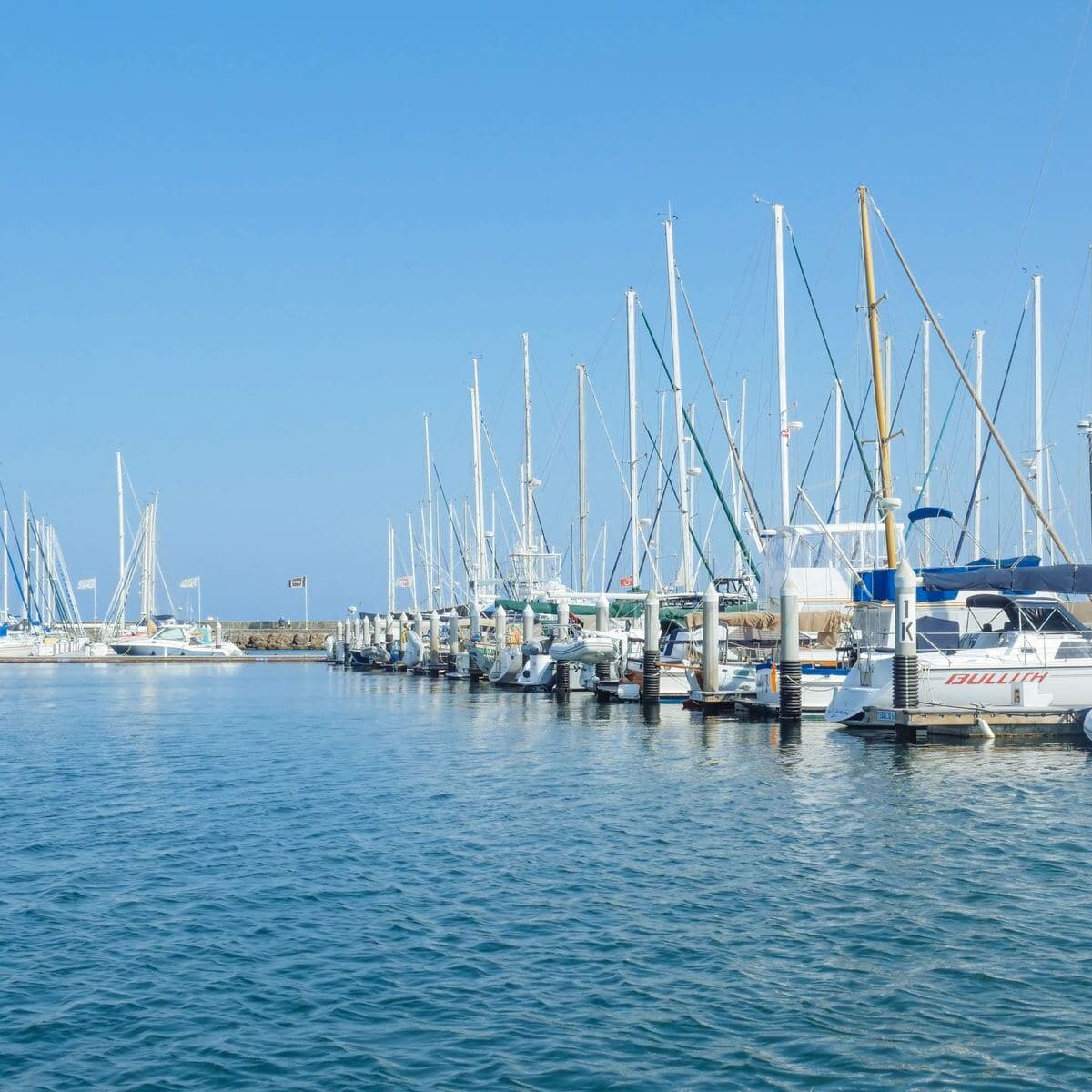

No, California law doesn't require you to insure a boat or jet ski, but most boat owners need insurance anyway. California does require you to register a motorized boat with the DMV and, as of January 1, 2025, to carry a California Boater Card to operate one, but there is no state insurance requirement.[1][2] Marinas, lenders and many lakes and harbors require liability insurance, and a single accident could easily cost far more than a year of premiums.
This guide covers what California requires of boat and personal watercraft (PWC) operators, what a boat policy covers, how agreed value works for boats, what sets the price and what to do after an accident. To request a boat quote, start from our boat insurance page.
Is boat insurance required in California?
Not by state law. California's boating rules require registration of any sailboat over eight feet and any vessel with a motor, a Boater Card for operators, and safety equipment such as life jackets, but not insurance.[1] The requirement usually comes from a contract instead:
- Marinas and yacht clubs commonly require liability insurance and name themselves as additional insureds on the policy.
- Lenders require physical damage coverage on a financed boat, with the lender listed as loss payee.
- Lakes, harbors and storage facilities can set their own proof-of-insurance rules.
What does California require of boat and jet ski operators?
A Boater Card, a minimum age and registration. California's Boater Card was phased in by operator age from 2018, and as of January 1, 2025 every operator of a motorized vessel needs one, regardless of age.[2] To operate a vessel with a motor of 15 horsepower or more, which includes personal watercraft (jet skis), you must be at least 16 years old and carry the card.[1] Everyone on board a PWC, and anyone towed behind a vessel, must wear a Coast Guard-approved life jacket.[1]
If a boating accident causes a death, a disappearance, an injury that needs treatment beyond first aid, damage over $500 or the complete loss of a vessel, the operator must report it to the Division of Boating and Waterways: within 48 hours for deaths within 24 hours, missing persons and injuries, and within 10 days for property damage.[5] Your insurer will likely ask for a copy of that report on a larger claim.
What does boat insurance cover?
Two main parts: liability and physical damage.
| Coverage | What it pays |
|---|---|
| Liability | Injuries to other people and damage to their property or boats when you're responsible |
| Physical damage | Damage to or loss of your boat, motor and equipment, often at agreed value |
| Medical payments | Medical costs for people on your boat, regardless of fault |
| Uninsured boater | Your injuries caused by another boater with no insurance |
| Trailer | Damage to the boat trailer, when added |
Agreed value matters for a boat just as it does for a collector car. Hagerty's marine program, written with Markel American Insurance Company, agrees an insured value up front and pays the full agreed amount in a covered total loss; its Cherished Salvage feature lets the owner keep the boat plus receive its total value after a total loss.[4] Our guide to agreed value car insurance explains how agreed value differs from stated value and actual cash value.
How much is boat insurance in California?
It depends on the boat itself, how and where it's used, and who drives it; insurers quote each boat individually. Hagerty's marine quote asks for the boat's year, make, model, value and length, engine type and horsepower, top speed, navigation area, usage, storage address and type, the trailer if it will be covered, and every operator's moving violations, claims and years of boating experience.[3] Each of those moves the price:
| Factor | Effect |
|---|---|
| Value and length | Higher value and longer boats cost more to insure |
| Speed and horsepower | Faster boats cost more; Hagerty's standard boat program accepts up to 100 mph, and faster boats go to a high-performance program[3] |
| Navigation area | Wider navigation, such as coastal or offshore use, costs more than a lake |
| Storage | A secure marina, lift or garage lowers theft and weather risk |
| Operators' records | Violations, claims and little boating experience raise the price |
Hagerty's boat program covers boats 27 feet and under valued up to $1 million, with no age restriction and broad navigation on both U.S. and Canadian waters; its yacht program covers boats 27 feet and over valued up to $2 million.[3] Menlo requests boat quotes from Hagerty's marine team. Jet skis and other personal watercraft are often written by separate PWC programs, so tell us what you own when you ask for a quote.
Does my homeowners policy cover my boat?
Only in a very limited way. Homeowners insurance typically has a low dollar limit for watercraft, trailers and equipment, and does not include liability if the boat is large or fast. For example, Foremost's manufactured home policy limits all watercraft, including trailer, furnishings, equipment and motor, to $1,500.[6] For anything more than a small rowboat or kayak, buy a boat policy. If you have a personal umbrella, make sure it sits over your boat's liability; our guide to personal umbrella insurance cost explains underlying limits.
Frequently asked questions
Is boat insurance required in California?
Do you need insurance for a jet ski in California?
Not by law, but a jet ski can injure people and damage property, so liability insurance is sensible, and a lender or marina may require it. Operators must be 16 or older and carry a Boater Card.[1]
How much is boat insurance in California?
It is quoted per boat, based on value, length, engine and speed, navigation area, storage and the operators' records.[3]
When do I have to report a boating accident in California?
When there is a death, disappearance, injury needing more than first aid, damage over $500 or the loss of a vessel: within 48 hours or 10 days depending on the type.[5]
This guide is for educational purposes and summarizes California State Parks Division of Boating and Waterways information and carrier program documents. It is not legal advice. Coverage, eligibility and prices change, and your policy's terms control. Menlo Insurance Services (CA license 6020106) is a licensed broker that may earn a commission on a placement and does not guarantee that any coverage or price will be available.
The Bottom Line
California requires registration and a Boater Card, not insurance, but marinas and lenders usually require it, and liability alone justifies it.[1][2] Look for liability plus physical damage at agreed value, and expect the price to follow your boat's value, speed, use and storage.[3][4]
References
- 1.California State Parks, Division of Boating and Waterways. “Laws, Regulations, and Public Safety.” Accessed 2026-09-27. https://www.parks.ca.gov/?page_id=28984 ↩
- 2.California Division of Boating and Waterways. “About the Card: California Boater Card.” Accessed 2026-09-27. https://californiaboatercard.com/about-the-card/ ↩
- 3.Hagerty. “Marine Underwriting Guide 2025 (quote checklist and program eligibility).” 2025. https://6041899.fs1.hubspotusercontent-na1.net/hubfs/6041899/Carrier%20Store%20Resources/Hagerty/Marine%20Underwriting%20Guide%202025.pdf ↩
- 4.Hagerty. “Stay on course with Hagerty Marine (agent one-pager).” 2025. https://6041899.fs1.hubspotusercontent-na1.net/hubfs/6041899/Carrier%20Store%20Resources/Hagerty/Marine%20-%20OnePager%20-%20Agent%202025.pdf ↩
- 5.California State Parks, Division of Boating and Waterways. “Reporting Boat Accidents.” Accessed 2026-09-27. https://dbw.parks.ca.gov/?page_id=28776 ↩
- 6.Foremost Insurance Group. “Manufactured Home Coverage Comparison (Coverage C limitations).” 2017. https://6041899.fs1.hubspotusercontent-na1.net/hubfs/6041899/Carrier%20Store%20Resources/Foremost/Foremost%20Manufactured%20Home%20Coverage%20Comparison.pdf ↩