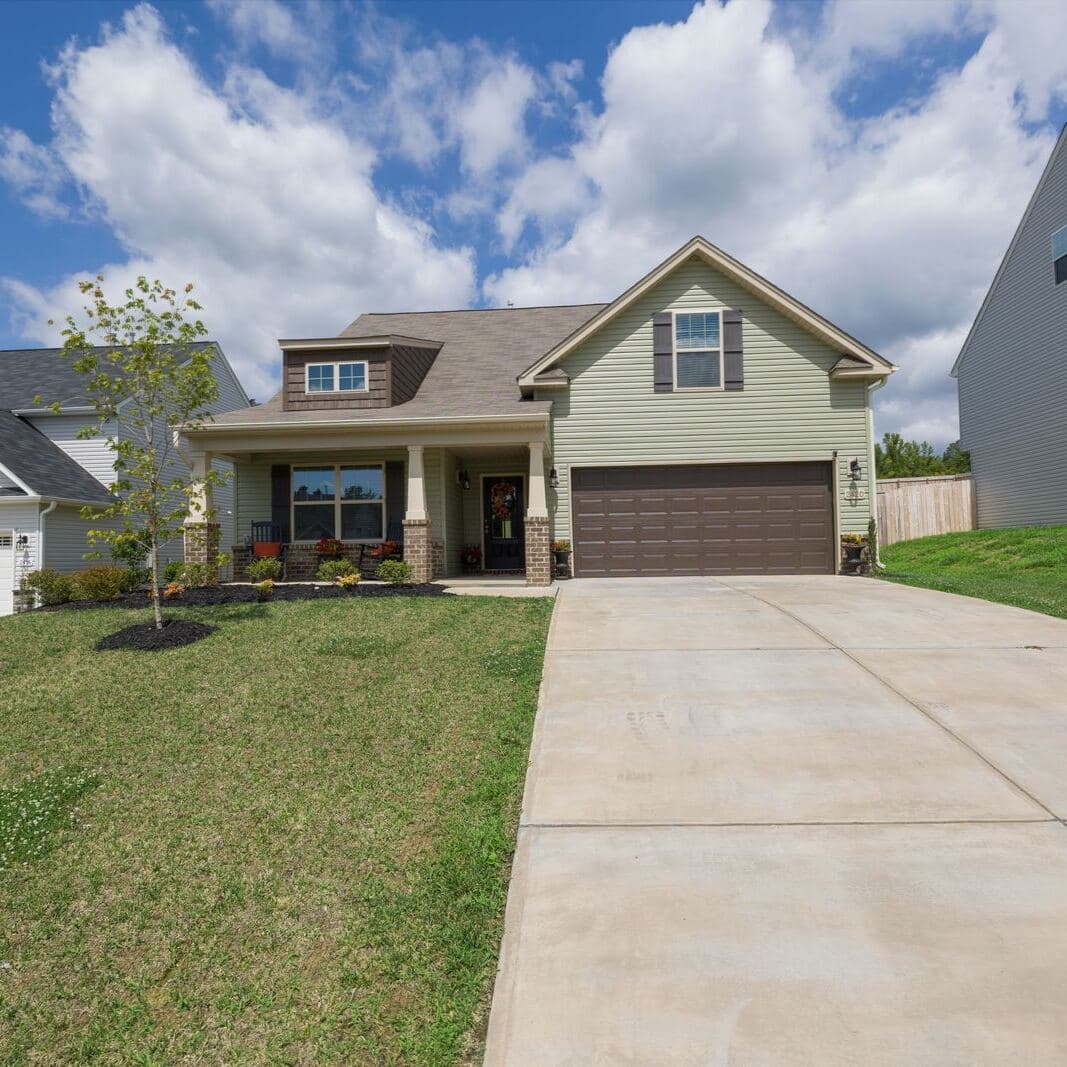

A second home needs its own policy, and the type depends on how you intend to use the house. If your family uses it for part of the year, a homeowners policy written for a seasonal or secondary residence usually fits. If you rent it out, you are best suited by a landlord or dwelling fire policy. If it is unoccupied for extended periods, you need coverage written for vacancy, because California's standard fire policy drops fire coverage after 60 consecutive days of vacancy unless the policy says otherwise.[1]
This guide sorts second homes by use, lists which California programs write each kind, and highlights the rental and vacancy limits that trip owners up. To get quotes for a second home, start from our homeowners insurance page.
Can you have homeowners insurance on two homes?
Yes. Each home gets its own policy, and you can buy both from the same company or from two different ones. What you cannot do is stretch the coverage on your primary home over your second home; the second home needs a policy that names the property and describes how it will be used. Insurers ask whether the property is your primary or secondary residence because an unoccupied house has more undetected water leaks, theft and vandalism.
Which policy fits my second home?
Match the policy to the way the house is actually used:
| How the home is used | Usual policy | California programs and limits |
|---|---|---|
| Family uses it part of the year | Homeowners (HO-3) for a secondary or seasonal residence | Delos writes secondary homes up to $3 million total insured value and $1.5 million dwelling[6]; Annex accepts secondary and seasonal homes[3] |
| Rented to a long-term tenant | Landlord endorsement on an HO-3, or a dwelling fire policy (DP-3) | Delos landlord endorsement for long-term rentals only[2]; Aegis dwelling fire for tenant homes[7] |
| Rented short term (vacation rental) | A program that accepts short-term rentals | Green Shield targets secondary and short-term rental homes[4]; Aegis dwelling fire covers vacation rental homes[7]; Annex allows rentals under 20 weeks a year, no dedicated short-term rentals[3] |
| Empty for months at a time | Vacant home policy | See our guide to vacant and inherited homes |
| No private insurer will write it | California FAIR Plan plus a DIC | FAIR Plan writes seasonal homes, named perils only[5] |
For rentals, the difference between a homeowners policy and a dwelling fire form matters. Our guide to DP-1 vs. DP-3 explains the forms.
Is it more expensive to insure a second home?
Usually, yes. A home that is unoccupied part of the year has a greater chance of an unnoticed water leak or break-in, and many second homes in California are in mountain or rural areas with greater wildfire risk and farther from fire stations. Renting it out also adds liability and wear. Premiums depend on the program, the house and the location, so compare multiple quotes on the same use and limits.
Things that help: monitored alarm systems, water shut-off valves or leak sensors, a local person who checks on the house while you're away, and wildfire mitigation such as a Class A roof and cleared defensible space.
What happens if my second home sits empty?
Coverage can shrink or stop. Under California's standard fire policy, the insurer isn't liable for fire loss while a building "is vacant or unoccupied beyond a period of 60 consecutive days," unless the policy provides otherwise.[1] The FAIR Plan's dwelling policy excludes vandalism and malicious mischief once the home has been vacant or unoccupied for more than 30 consecutive days before the date of loss.[8] A seasonal home policy written for part-year use is designed with this in mind, but if the house will stand empty for an extended period, for example after you stop using it or while it's for sale, switch to a vacant policy.
Do I need earthquake and flood on a second home?
The same as on any California home: homeowners, dwelling fire and FAIR Plan policies exclude both, so each needs its own policy if you want it.[8] Our guide to earthquake insurance cost in California shows average earthquake premiums by policy type in 2025.
Frequently asked questions
What insurance do I need for a second home?
Can I rent my second home on Airbnb with a homeowners policy?
Does the California FAIR Plan insure second homes?
Yes. Its dwelling policy writes seasonal homes as well as owner-occupied and rental homes, on named perils only.[5]
This guide is for educational purposes and summarizes the California Insurance Code, California FAIR Plan documents and carrier program guides. Programs and eligibility change, and your policy's terms control. Menlo Insurance Services (CA license 6020106) is a licensed broker and a registered FAIR Plan broker. It may earn a commission on a placement and does not guarantee that any coverage or price will be available. Several second-home programs are written by non-admitted insurers, which are not backed by the California Insurance Guarantee Association. Each quote names its insurer and whether it is admitted.
The Bottom Line
Insure your second home for how you actually use it: seasonal homeowners for family use, a landlord or dwelling fire policy if it's rented out, a program that insures short-term rentals for vacation rentals, and a vacant policy when it's unoccupied.[2][3][4] Watch the 60-day vacancy rule, and buy earthquake and flood coverage separately.[1][8]
References
- 1.California Legislative Information. “Insurance Code Section 2071 (California Standard Form Fire Insurance Policy).” Accessed 2026-09-27. https://leginfo.legislature.ca.gov/faces/codes_displaySection.xhtml?sectionNum=2071.&lawCode=INS ↩
- 2.Delos Insurance Solutions. “Homesite Policy Comparison: Homeowners vs Landlord.” 2023. https://6041899.fs1.hubspotusercontent-na1.net/hubfs/6041899/Carrier%20Store%20Resources/Delos/ho3%20vs%20ho3%20landlord.pdf ↩
- 3.Annex Risk. “Annex Homeowners Appetite Guide.” 2023. https://6041899.fs1.hubspotusercontent-na1.net/hubfs/6041899/Carrier%20Store%20Resources/Annex/Annex%20Homeowners%20Appetite%20Guide.pdf ↩
- 4.Green Shield Risk Solutions. “Dwelling Fire: Specialty Lines program sheet.” 2026. https://6041899.fs1.hubspotusercontent-na1.net/hubfs/6041899/Green%20Shield%20Risk/Dwelling%20Fire-%20Specialy%20Lines.pdf ↩
- 5.California FAIR Plan Association. “Dwelling policies.” Accessed 2026-09-27. https://www.cfpnet.com/policies/dwelling/ ↩
- 6.Delos Insurance Solutions. “Delos Guide One Sheet.” 2025. https://6041899.fs1.hubspotusercontent-na1.net/hubfs/6041899/Carrier%20Store%20Resources/Delos/Delos%20Guide%20One%20Sheet.pdf ↩
- 7.Aegis General Insurance Agency. “Aegis General Product Overview (CA).” 2026. https://6041899.fs1.hubspotusercontent-na1.net/hubfs/6041899/Carrier%20Store%20Resources/Aegis/Aegis%20General%20Product%20Overview%20CA.pdf ↩
- 8.California FAIR Plan Association. “Dwelling Fire Policy (sample), effective 3/17/2026.” 2026. https://www.cfpnet.com/wp-content/uploads/2026/01/Dwelling-Fire-Policy_effective-3-17-26.pdf ↩