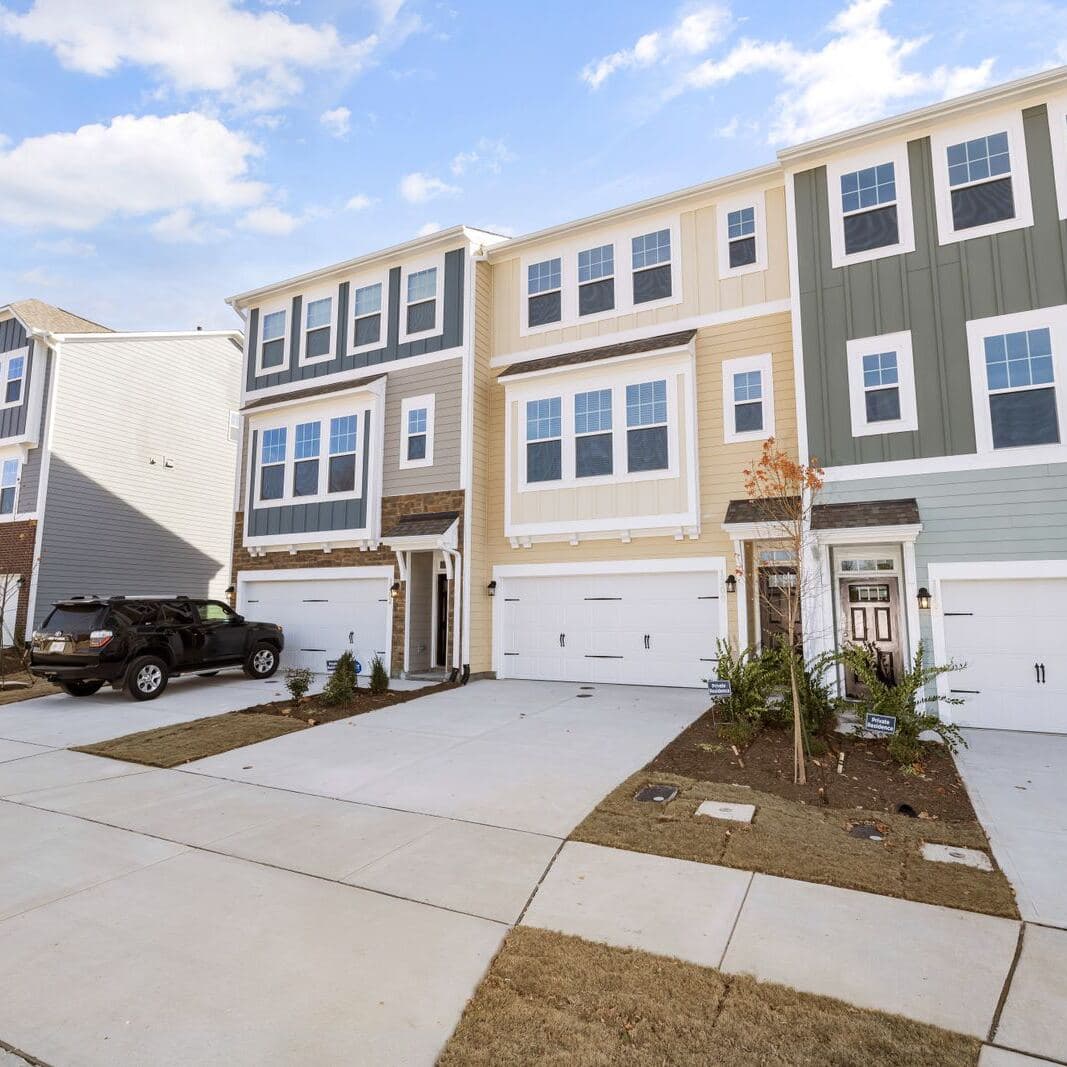

An HOA master insurance policy is the association's own policy: it insures the property the owners hold in common and the association's liability, and it may or may not cover the interior of each unit. What it covers is determined by the association's governing documents and the policy form, usually one of three types: bare walls, single entity or all-in.[1] California law adds minimum general liability, directors and officers (D&O) and crime coverage that an association needs to adequately protect its owners and volunteer board members.[2][3][4]
This guide was written for California HOA board members, property managers and owners who want to understand what the master policy does and does not do, what California law expects of associations, and what each owner still has to insure personally. For association liability quotes, see our HOA insurance page.
What does an HOA master policy cover?
The common property and the association's liability, and sometimes parts of each unit. Common property is what the owners share, such as roofs, exterior walls, hallways, pools, clubhouses, landscaping and common systems. Liability covers injury to someone on the common areas and lawsuits brought against the association. How far the property coverage extends into an individual unit depends on the policy type:
| Master policy type | What it covers inside a unit | What the owner's HO-6 must cover |
|---|---|---|
| Bare walls | Structure only; nothing inside the unit's walls[1] | Interior walls, fixtures, cabinets, flooring, improvements and belongings |
| Single entity | Structure plus the original fixtures and finishes as built[1] | Upgrades the owner added, and belongings |
| All-in (all inclusive) | Structure, original fixtures, and improvements owners added[1] | Mainly belongings, liability and the owner's share of the deductible |
Review the governing documents (CC&Rs) along with the policy. The CC&Rs tell you who has a duty to insure which parts, and the policy tells you what the association actually bought.
What insurance does California require of an HOA?
California ties important protections to specific coverage amounts in the Davis-Stirling Act:
| Coverage | Amount | What it does |
|---|---|---|
| General liability | At least $2,000,000 for 100 or fewer separate interests; $3,000,000 above 100[2] | Tort claims from the common areas must be brought against the association, not individual owners[2] |
| Directors and officers (D&O) plus general liability | D&O of at least $500,000 for 100 or fewer separate interests; $1,000,000 above 100[3] | Volunteer directors and officers acting in good faith within their duties are not personally liable[3] |
| Crime / fidelity | At least the association's reserves plus three months of assessments, with the same amount for computer and funds transfer fraud[4] | Covers theft by directors, officers, employees and the managing agent; self-insurance doesn't count[4] |
These amounts are minimums. The governing documents can require more, and many associations buy an umbrella or excess liability policy on top.
How do owners find out what the association carries?
Through the annual budget report. California requires it to contain a summary of the association's property, general liability, earthquake, flood and fidelity policies, including the name of each insurer, the type of insurance, the limits and the deductibles.[6] The summary must warn owners, in bold, that the association's policies may not cover their own property or injuries in their unit and that owners may be responsible for deductibles.[6] If a policy lapses, is cancelled with no replacement, or is modified to reduce coverage or increase a deductible, the association must notify every member.[7]
Owners can ask the association for a copy of the full policy to see in detail what is and isn't covered; the summary cannot serve as a substitute for it.[6]
What is the difference between an HO-6 and a master policy?
The master policy insures the association, and an HO-6 insures the individual owner. The owner's HO-6 covers the parts of the unit the master policy leaves out, the owner's belongings, personal liability while inside the unit, and loss assessment coverage for the owner's share of an association deductible or uninsured loss. Our guide to loss assessment coverage explains how to size that limit from the master deductible.
Does the master policy cover earthquake?
Only if the association purchased earthquake insurance, and many did not. The budget report summary must state whether the association has earthquake and flood coverage.[6] If it doesn't, a large earthquake may lead to a special assessment, and the owner's protection is a separate earthquake policy with its own loss assessment limit.
What does HOA insurance cost?
It depends on the number of units, the common facilities, the building values and the claim history. Liability for an HOA is generally priced per unit: LIO's homeowner association program rates general liability on the number of units and asks about pools, security guards, a 55+ community, building height and contractors.[8] Property on the master policy is rated on the replacement cost of the buildings, which is why Fannie Mae's 100% replacement cost rule matters for associations whose owners use conventional mortgages.[5]
Menlo quotes HOA and planned-development general liability through LIO, which lists homeowners associations, PUDs and master communities among its classes.[8][9] However, LIO's condominium association product isn't available in California, so condominium associations will have to get quotes from other markets.[8]
Frequently asked questions
What does an HOA master insurance policy cover?
The association's common property and its liability. Depending on the type, bare walls, single entity or all-in, it may also cover original fixtures or owner improvements inside units.[1]
How do I get a copy of my HOA's master policy?
Ask the association or its manager. Every year the budget report must summarize each policy's insurer, limit and deductible, but the summary is not the full policy.[6]
Does an HOA need D&O insurance in California?
To give volunteer directors and officers immunity from personal liability, yes: at least $500,000 of D&O for 100 or fewer separate interests, or $1 million above 100, together with general liability.[3]
Who pays the master policy deductible?
The association, which can pass it to owners through a special assessment if the governing documents allow. Owners cover their share with loss assessment coverage on their own policy.
This guide is for educational purposes and summarizes the California Civil Code (Davis-Stirling Common Interest Development Act), Fannie Mae's Selling Guide and carrier program information. Governing documents and policies vary, and their terms control. It is not legal advice; boards should confirm requirements with the association's counsel. Menlo Insurance Services (CA license 6020106) is a licensed broker that may earn a commission on a placement and does not guarantee that any coverage or price will be available.
The Bottom Line
The master policy insures what the owners share and the association's liability; whether it reaches inside units depends on its type and the CC&Rs.[1] In California, carry at least the Davis-Stirling liability, D&O and crime minimums, disclose them in the budget report, and tell owners what their HO-6 must fill.[2][3][4][6]
References
- 1.Voss Law Firm. “Three Basic Types of Condo Master Insurance Policies.” Accessed 2026-09-27. https://www.vosslawfirm.com/library/three-basic-types-of-condo-insurance-policies-and-what-s-right-for-you.cfm ↩
- 2.California Legislative Information. “Civil Code section 5805.” Accessed 2026-09-27. https://leginfo.legislature.ca.gov/faces/codes_displaySection.xhtml?lawCode=CIV§ionNum=5805. ↩
- 3.California Legislative Information. “Civil Code section 5800.” Accessed 2026-09-27. https://leginfo.legislature.ca.gov/faces/codes_displaySection.xhtml?lawCode=CIV§ionNum=5800. ↩
- 4.California Legislative Information. “Civil Code section 5806.” Accessed 2026-09-27. https://leginfo.legislature.ca.gov/faces/codes_displaySection.xhtml?lawCode=CIV§ionNum=5806. ↩
- 5.Fannie Mae. “Selling Guide B7-3-03, Master Property Insurance Requirements for Project Developments.” Accessed 2026-09-27. https://selling-guide.fanniemae.com/sel/b7-3-03/master-property-insurance-requirements-project-developments ↩
- 6.California Legislative Information. “Civil Code section 5300.” Accessed 2026-09-27. https://leginfo.legislature.ca.gov/faces/codes_displaySection.xhtml?lawCode=CIV§ionNum=5300. ↩
- 7.California Legislative Information. “Civil Code section 5810.” Accessed 2026-09-27. https://leginfo.legislature.ca.gov/faces/codes_displaySection.xhtml?lawCode=CIV§ionNum=5810. ↩
- 8.LIO Insurance. “Homeowner Association quote system (classes, per-unit liability basis, underwriting questions) and Condominium Association availability, as walked by Menlo, September 2026.” Accessed 2026-09-27. https://lioinsurance.com/ ↩
- 9.LIO Insurance. “LIO Product Overview (January 2025).” 2025. https://6041899.fs1.hubspotusercontent-na1.net/hubfs/6041899/Carrier%20Store%20Resources/Lio/Why%20Work%20with%20LIO%20Insurance%20Company.pdf ↩